

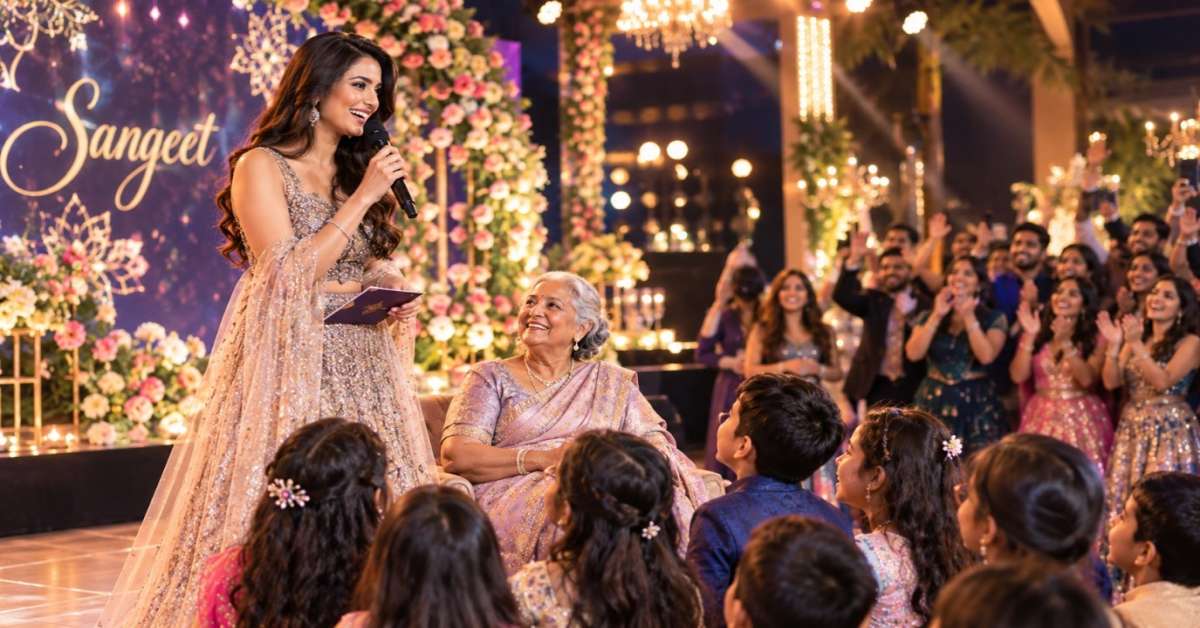
A grandmother wants the blessing ceremony to start on time. A seven-year-old wants to hold the microphone. A cousin from Sharjah keeps asking for louder music. One person has to answer all three and keep smiling.
That is the daily reality for a wedding anchor in Dubai. Families here often bring three generations under one roof, sometimes from four or five countries. In our experience, the host decides whether each of them feels welcome. This blog explains what to check, what to ask, and which signs to trust.
Why Mixed Crowds Need a Skilled Host
A crowd of different ages does not share one sense of humour. A joke that delights a college student may confuse an uncle. A game that thrills children may bore the adults.
The host sets the pace for all of it. When the pace is right, grandparents stay for the cake cutting and children sit through the speeches. When it is wrong, people drift towards the corridor.
Good hosting is mostly about balance. It has little to do with being the loudest voice in the room.
Core Qualities to Look For
1. Strong Room-Reading Ability
A capable Indian emcee in Dubai notices small signals. A yawning child, a restless relative, a quiet table at the back. The programme shifts before the mood drops.
Ask how the host handled a delay or a slow crowd at a past event. The answer shows real experience.
2. Language Flexibility
Many Indian families here speak Hindi, Sindhi, Gujarati, Punjabi, Malayalam, or English at home. A host who moves between two or three languages makes elders feel respected. Younger guests usually prefer English with a touch of Hindi.
3. Cultural Knowledge
Rituals have an order and a meaning. A host should know when to speak and when to stay silent. A mispronounced family name, or a ceremony announced at the wrong moment, can hurt feelings quickly.
4. Steady Nerves
Music stops. A speaker forgets his lines. The photographer needs five more minutes. Calm hosts treat these moments as part of the job, not as disasters.
How a Good Host Serves Each Age Group
For Elders
- Use polite, clear speech and avoid slang.
- Introduce each ritual with short, respectful context.
- Keep the volume comfortable during speeches.
- Invite them to the stage with warmth, never as a joke.
For Children
- Plan short games of three to five minutes.
- Give each child a small role, such as handing out flowers or leading a countdown.
- Keep all humour suitable for young ears.
- Choose activities that are safe around dance floors and stage steps.
For Party Guests
- Build energy in stages, not all at once.
- Use dance rounds, couple games, and light banter.
- Invite quieter guests without putting them on the spot (yes, even the uncle who claims he never dances).
- Know when to hand the floor to the DJ.
A skilled host moves between these three modes within minutes. The change should feel smooth, almost unnoticed.
Questions to Ask Before You Book
Preparation shows in the answers. We suggest asking these:
- Which family events have you hosted with guests of all ages?
- How do you prepare for ritual-heavy functions?
- Can you share a full video, not only a highlight reel?
- Which languages can you use comfortably on stage?
- How do you plan segments for children?
- What is your plan if the schedule runs late?
Full recordings matter. Highlight clips are edited to look perfect, and they hide the slow moments.
Warning Signs to Notice
- A fixed script that never changes between events.
- Jokes that depend on age, body type, or region.
- No interest in meeting the family or the planner.
- Vague answers about timing and backup plans.
- Promises of a nonstop party with no mention of elders.
Any one of these may be harmless on its own. Together, they point to limited experience.
The Value of a Pre-Event Briefing
Even the best host needs information. A short call between the family, the planner, and the host makes a large difference.
Share these details:
- Names and relationships of key family members
- The order of rituals and any religious sensitivities
- The number of children and their age range
- Planned surprises, tributes, or speeches
- Songs or topics to avoid
A good host will also ask questions you had not thought of. Pay attention to that. It reflects care.
Matching the Host to the Occasion
Birthdays, anniversaries, and housewarmings carry different expectations. A host for a party in Dubai may need to run games for two hours, or keep a formal toast brief and graceful. Wedding functions move through mehendi, sangeet, and reception, and each has its own mood.
Look for someone who adjusts to the occasion instead of repeating one format. A family gathering is not a nightclub, and a sangeet is not a corporate dinner. A seasoned wedding host understands this difference without being told.
Conclusion
The right host does not pull attention away from the family. The host guides it. Grandparents feel honoured, children feel included, and friends feel free to enjoy the night.
Look for room-reading skill, language comfort, cultural knowledge, and steady nerves. Ask direct questions, watch full recordings, and share a clear brief. These steps protect your event from avoidable stress.
For families who want warmth combined with professional discipline, Priya Jethani offers hosting for weddings and private celebrations across the UAE, shaped by years on television and live stages. A short conversation about your event is a good place to begin.
FAQs
What should we look for in a wedding anchor in Dubai for a multi-generation family?
Check recent full-length videos and ask about language range. Request references from families with a similar guest list. A short trial call also helps you judge tone and manners.
How far ahead should we book a host for a party in Dubai?
We suggest four to six weeks for private parties. Wedding functions in peak season, between October and March, often need two to three months. Early booking leaves time for a proper briefing.
Can an Indian emcee in Dubai host in more than one language?
Yes. Many hosts work in English and Hindi, and some add regional languages. Confirm this before booking, and share the languages your family speaks so segments can be planned.
How do hosts keep children engaged without disturbing the ceremony?
They place short, supervised activities between formal segments. Small stage roles, quiz rounds, and group games work well. The timing is agreed with the planner in advance.